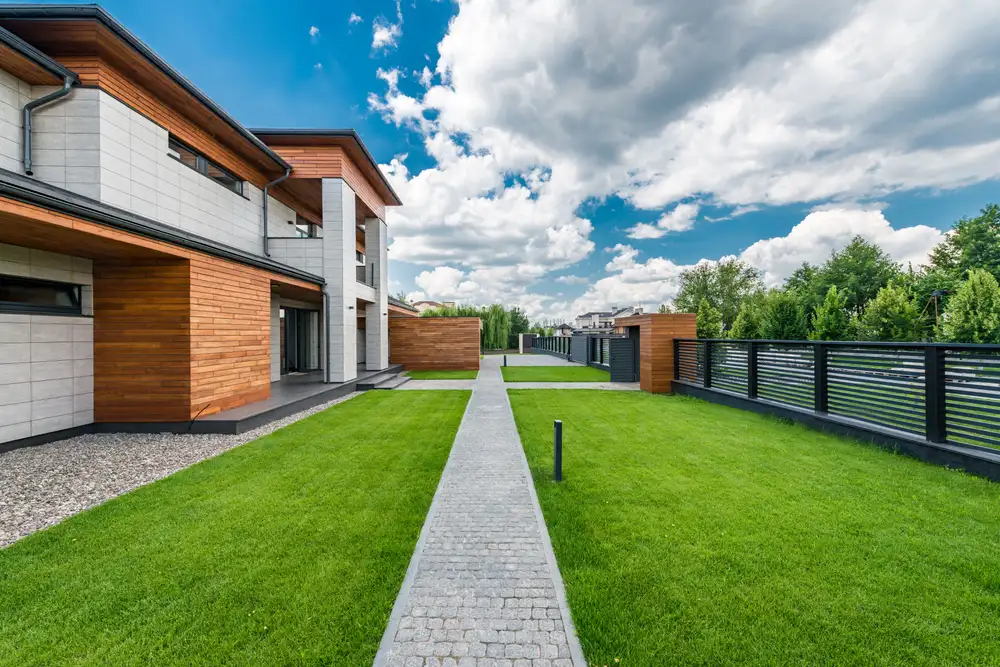
From the tree-canopied streets of Midtown to the horse country fringes near Southwood, Tallahassee Fence Masters installs and repairs fencing across every corner of Florida's capital city and Leon County.
A city of live oaks, government buildings, three campuses, and everything in between.
Tallahassee is Florida's state capital and the seat of Leon County — a city that has been the center of state government since 1824, when it was chosen as the capital of the Florida Territory for sitting roughly halfway between St. Augustine and Pensacola. That history is still visible downtown, where the Florida State Capitol complex anchors a government and business district a short walk from historic neighborhoods. But Tallahassee is also a college town three times over: Florida State University (FSU), Florida A&M University (FAMU), and Tallahassee Community College (TCC) all call the city home, layering a large student and rental population on top of long-established family neighborhoods.
What ties all of it together, from the government core downtown to the horse properties out toward Southwood, is the tree canopy. Locals call Tallahassee the "City of Trees," and Leon County maintains nine official canopy roads — corridors shaded by live oaks, sweet gums, hickories, and pines whose branches can span 150 feet overhead. Every fence installation crew working in this city, in any neighborhood, eventually runs into a canopy road's root system, and knowing how to work around one without damaging it or the fence line is a genuinely local skill.
Tallahassee Fence Masters serves the full service area — every neighborhood, every landmark corridor, every ZIP code from Midtown to Southwood — with the same call-only, no-nonsense approach: one phone number, straight answers, and a crew that already knows which of your neighbors have oak roots to work around and which have HOA fence-height rules to satisfy.
Soil, storms, and canopy roads shape every install differently by neighborhood.
Tallahassee sits in the Red Hills region, where the native soil is a reddish "Orangeburg fine sandy loam" — mostly sand with a bit of clay and iron oxide. It drains reasonably well citywide, but low-lying pockets, like the historic basin near downtown's Cascades Park, have documented flood and stormwater history. Our crews still set every post on a proper gravel base regardless of neighborhood, because sandy soil alone doesn't guarantee good drainage at the fence line.
Add in Tallahassee's hot, humid climate with heavy summer thunderstorms and the occasional tropical storm remnant, and storm-damage fence repair becomes a real, recurring need citywide — not just after a named storm, but after any severe summer squall that snaps an old wood picket or uproots a panel.
Nine official canopy roads and mature live oaks citywide mean careful hand-digging near roots is standard practice, not an upcharge.
Summer thunderstorms and tropical remnants routinely take down aging wood panels and gates across the city.
From tight downtown lots to acreage near Southwood and the Leon County outskirts, we size the job to the property.
Residential, commercial, and rural fencing for every part of the city.
Classic privacy and picket fencing for established neighborhoods.
Backyard privacy for tight urban lots and suburban yards alike.
Perimeter and security fencing for offices, retail, and campus-adjacent business.
Larger-acreage fencing for the semi-rural fringe toward Southwood and beyond.
A genuinely mixed service area, not a one-type-of-customer city.

Tallahassee's fencing needs vary as much as its neighborhoods do. Urban homeowners near downtown and the universities often need privacy and boundary fencing on small, older lots. Suburban families in planned communities like Killearn Estates or Betton Hills usually want fencing that fits an HOA-governed, tree-canopied look. Student-rental landlords near FSU, FAMU, and TCC need durable, low-maintenance fencing that survives tenant turnover. Commercial and office property owners along corridors like Apalachee Parkway need perimeter and security fencing. And out toward Southwood and the Leon County fringe, farm and ranch fencing for larger-acreage and horse-country properties is a real, ongoing need.
Jump straight to your neighborhood or nearby landmark for area-specific fencing guidance.
Because Tallahassee's service area spans dense urban blocks, established mid-century suburbs, HOA-governed planned communities, and semi-rural acreage, "one fence style fits all" doesn't hold up here the way it might in a smaller, more uniform city. A privacy fence that satisfies an Architectural Review Committee in SouthWood looks nothing like the chain-link security fencing a landlord wants on a student rental near FAMU, and neither looks like the farm-style perimeter fencing that makes sense on a larger lot toward the Leon County outskirts near Miccosukee or Centerville Road.
Leon County's nine official canopy roads, plus the countless unofficial oak-lined streets throughout neighborhoods like Betton Hills, Los Robles, and Midtown, mean our crews routinely hand-dig post holes to avoid severing a root that could kill a hundred-year-old live oak — or worse, undermine the fence line itself once the root eventually rots away underground. This isn't a rare occurrence; it's closer to a weekly reality for any fencing contractor working across this city's older, tree-lined neighborhoods.
Planned communities like Killearn Estates and SouthWood are HOA-governed, with SouthWood's Architectural Review Committee enforcing specific height, material, and color rules for any fence. Historic pockets like Los Robles and parts of downtown near the Park Avenue Historic District carry a different kind of expectation — not a private HOA, but a general sense that new fencing should respect the neighborhood's historic character. We navigate both without treating either as a special favor.
Tallahassee's hot, humid climate and heavy summer thunderstorm pattern, occasionally compounded by tropical storm remnants moving up from the Gulf, put real wear on wood fencing citywide. Storm-damage repair calls come in from every part of the service area, not just older neighborhoods — newer vinyl and aluminum fencing holds up better, but even those need occasional post-storm attention after a truly severe blow.
Leon County's outskirts toward Miccosukee and Centerville Road, along with larger-lot pockets near Southwood, include genuine horse country and larger-acreage properties. Farm and ranch fencing here is a different discipline from suburban privacy fencing — longer perimeter runs, different post spacing, and materials chosen for livestock containment rather than aesthetics alone. It's a smaller share of our work than residential and commercial fencing, but a real one.
Whatever part of Tallahassee you're in, the fastest way to get a straight answer on your specific property is to find your neighborhood or nearby landmark above, or call us directly for a citywide estimate.
Straight answers — no clicking around.
One phone number, straight answers, and a crew that knows this city's neighborhoods.
(877) 544-9363